
Indication:
Breast Cancer:
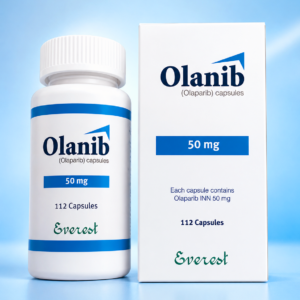
Olanib (Olaparib) is indicated as monotherapy for the treatment of adult patients with deleterious or suspected deleterious germline BRCA-mutated (gBRCAm), human epidermal growth factor receptor 2 (HER2)-negative metastatic breast cancer who have previously been treated with chemotherapy in the neoadjuvant, adjuvant or metastatic setting. Patients with hormone receptor (HR)-positive breast cancer should have progressed on or be considered inappropriate for endocrine therapy. Germline BRCA mutation must be confirmed before Olanib treatment is initiated.
Ovarian Cancer:
Olanib (Olaparib) is indicated as monotherapy for the maintenance treatment of adult patients with platinum sensitive relapsed (PSR) high-grade epithelial ovarian, fallopian tube or primary peritoneal cancer who are in response (complete response or partial response) to platinumbased chemotherapy.
Olaparib 300 mg PO BID, plus Bevacizumab 15 mg/kg IV q3Weeks for a total of 15 months (including with chemotherapy and as maintenance) Continue until disease progression, unacceptable toxicity, or completion of 2 years of treatment Refer to prescribing information for bevacizumab when used in combination with olaparib for more information Completion of 2 years of treatment Patients with complete response (no radiologic evidence): Stop treatment Patients with evidence of disease and may benefit from continuous treatment: Treat beyond 2 years.
Pancreatic Cancer: Indicated for first-line maintenance treatment of adults with deleterious or suspected deleterious gBRCAm metastatic pancreatic adenocarcinoma whose disease has not progressed on at least 16 weeks of a first-line platinum-based chemotherapy regimen 300 mg PO BID Continue treatment until disease progression or unacceptable toxicity Metastatic Castration-Resistant Prostate Cancer Indicated for deleterious or suspected deleterious germline or somatic homologous recombination repair (HRR) gene-mutated metastatic castration-resistant prostate cancer (mCRPC) in adults who have progressed following prior treatment with enzalutamide or abiraterone.
Contraindications:
Olaparib is contraindicated in patients who are hypersensitive to this drug or to any ingredient in the formulation.
The most common serious adverse reaction reported was anemia (2.4% Olanib vs 2.2% chemotherapy). The following serious ADRs were reported in one patient each: dermatitis allergic, neutrophil count decreased and platelet count decreased. The proportion of patients who permanently discontinued Olanib due to adverse events was 4.9% in the Olanib arm compared with 7.7% in the chemotherapy arm. Anemia and platelet count decrease were the only adverse reactions leading to discontinuation of Olanib in more than one patient.
Overdose Effect:
There is no specific treatment in the event of Olanib overdose, and symptoms of overdose are not established. In the event of an overdose, physicians should follow general supportive measures and should treat symptomatically.
Therapeutic Class:
Targeted Cancer Therapy
Storage Condition:
Store in a dry place below 30°C, protect from light. Keep out of the reach of children.
Manufactured By Everest Pharmaceuticals Ltd.


Reviews
There are no reviews yet.