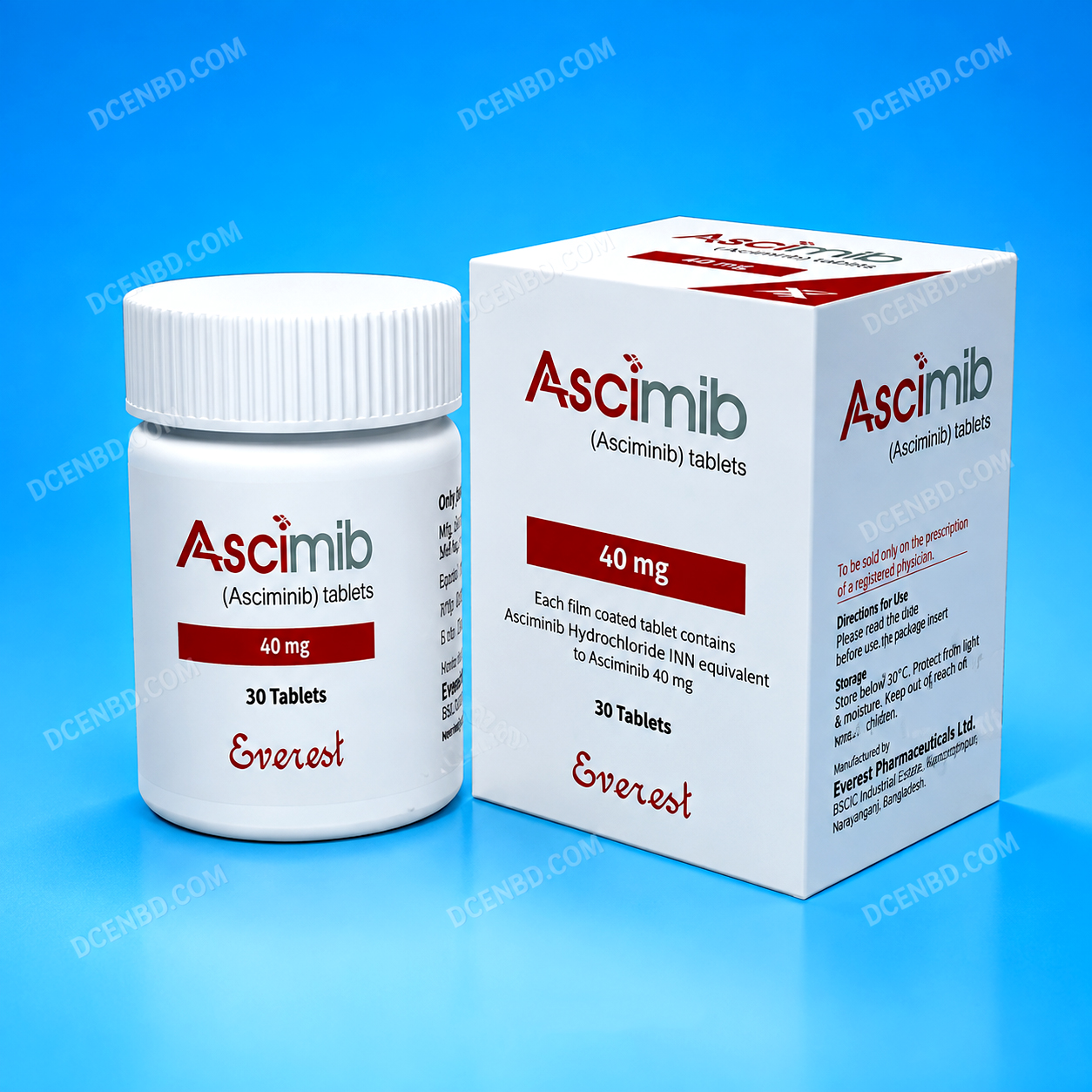
How It Works:
Unlike older tyrosine kinase inhibitors (TKIs) that compete for the ATP-binding site of the BCR-ABL1 protein, asciminib acts as an allosteric inhibitor. By locking the protein into an inactive shape, it halts the uncontrolled production of abnormal white blood cells. Because of its distinct binding method, it remains highly effective against many resistant CML mutations.
Dosage:
Asciminib is administered orally in tablet form and must be taken on an empty stomach (avoiding food for at least 2 hours before and 1 hour after taking the medication). Dosages vary based on the patient’s treatment history and the specific genetic profile of their cancer.
Side Effects:
Common adverse reactions associated with asciminib therapy include.
- Upper respiratory tract infections
- Musculoskeletal (muscle, bone, or joint) pain
- Fatigue and headache
- Diarrhea, nausea, and stomach pain
Important Precautions:
- Pregnancy and Breastfeeding: Asciminib can cause fetal harm. Women should use effective contraception during treatment and for at least one week after their final dose. Breastfeeding is also not recommended during this time.
- Drug Interactions: Tell your doctor about all medications, including herbal supplements. Products like St. John’s wort can significantly interact with asciminib.

Reviews
There are no reviews yet.